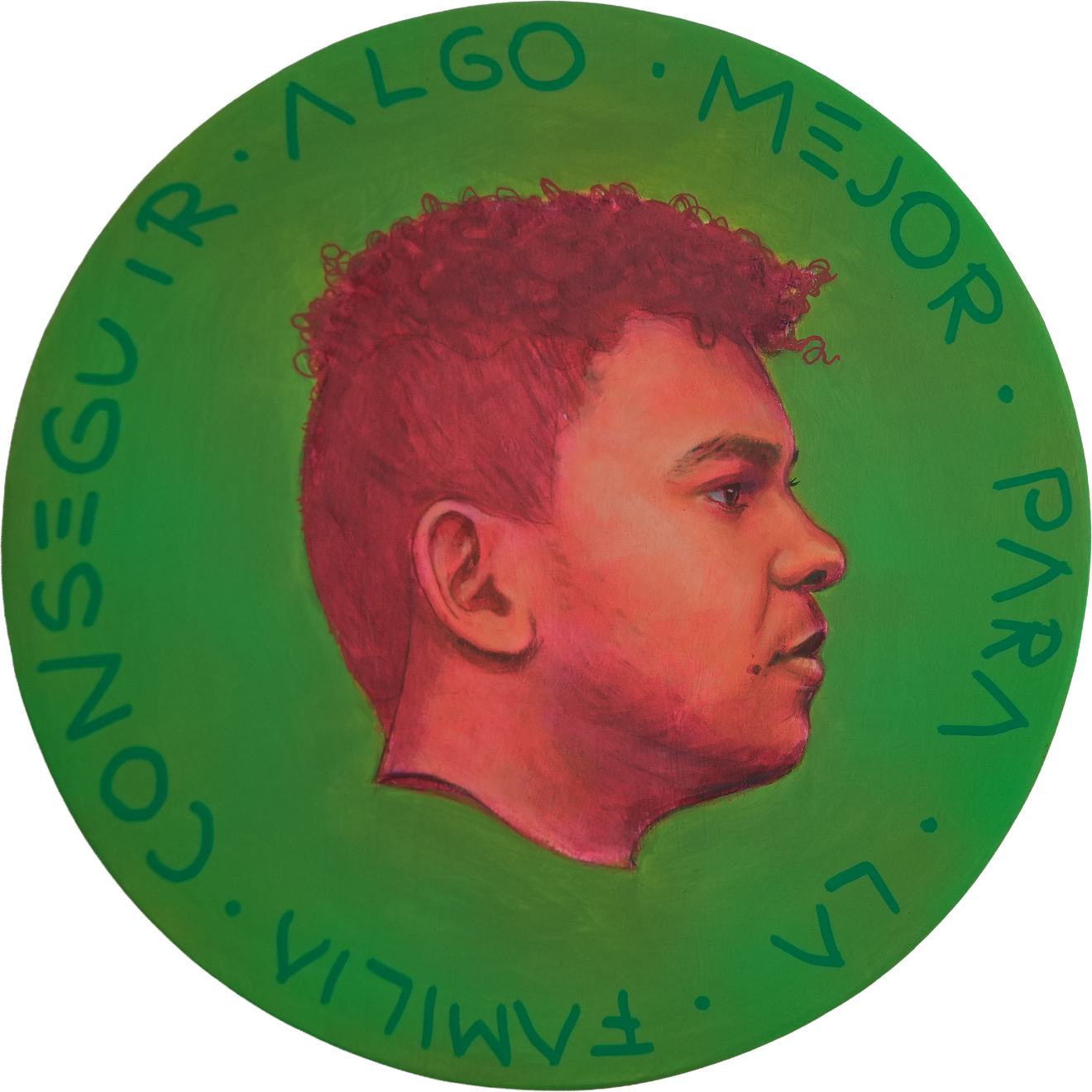
The story of Eric Story · installations and exhibitions: LSYTSDA Sala Alterarte
Position · 0:00 / 3:51 SubtitlesOff ES EN GL Transcript 0:00 My name is Eric Manuel Pichardo. I'm from the Dominican Republic and I'm 23. 0:05 I arrived in Spain seven years 0:08 ago. I'm currently living here in Ourense. 0:11 My mother came first, then my older brother, and then my younger brother and I. 0:16 When my mother first came here, she 0:19 wanted to find more opportunities for work 0:23 and a better life for the family. Then she said she wanted to bring us here 0:28 so we could finish our studies and have more opportunities. 0:32 At first I didn't really want to come, but I came. 0:37 When I arrived, I found it a little difficult to socialise with my classmates. 0:42 Some welcomed me, while others 0:45 didn't approve of my arrival. 0:48 At first I felt a little isolated because most of my classmates 0:53 didn't seem to like someone from elsewhere joining them. 0:57 But when I changed classes, I met 0:59 other classmates who were very kind. They 1:01 treated me well from day one. 1:04 It was pretty rough at first, but 1:06 the others always tried to get me out, 1:08 show me the city and help me discover more, 1:11 so I could settle in more easily. 1:12 As I said at the start, 1:14 some classmates asked why I had come, 1:16 and said I'd be better off going back to my country, 1:18 that I wouldn't feel comfortable here. 1:22 Several classmates were like that. They tried to make me 1:27 go back to my country, rather than stay. 1:29 At that moment, I thought 1:31 I'd ignore it, because my mother had made such a huge sacrifice to 1:35 bring me here. Just because someone said "go 1:36 back to your country", I wasn't going to abandon 1:38 everything. When I changed classes, I 1:41 met other classmates who gave me a 1:43 warm welcome. Then everything became much easier for me. 1:46 Yes, there was a time when I withdrew a little 1:49 from other people. 1:52 I barely spoke. 1:57 I felt a little, I don't know how to explain 2:00 it, belittled, you might say. But little by little 2:04 I've been coming out of my shell, showing who I really am. 2:08 When I arrived here, I brought in my suitcase 2:10 a small statue of the Virgin Mary, 2:12 which was very important to me: the 2:15 Virgin was with me. I also brought 2:17 a set of dominoes I used to play with my 2:20 parents and all my friends in the Dominican Republic. 2:23 When I think of home, I think of 2:26 there. The way people socialise there means knowing everyone. 2:29 Here, you're in your flat and you know the people in your home, 2:34 but you don't know anyone else. 2:37 But there, you could go to any block, any neighbourhood, and you knew 2:40 everyone. 2:41 You could walk all over the city. We're very sociable and we know 2:46 one another. 2:46 Yes, they complement each other. There are people 2:48 back home with whom I share lovely memories. 2:50 Every time I go back, I try to meet up 2:53 with them all. But I've met many people here too, 2:56 and we've made lots of memories and shared good times. 2:58 The plan is to stay here for a while 3:01 and then go back. 3:02 Or perhaps I'll keep going back and forth. 3:04 Spend some time there, some time here. 3:07 I've got used to being here now. 3:09 I'd tell them not to shut themselves away, 3:12 to get to know people and try to 3:15 go out. 3:15 Here, as I said, it's very different, because everyone 3:19 stays inside so much. 3:20 So when you arrive, you feel shut in and you're just in your flat, 3:25 not going out. We're more used to it now. I'd tell them to get to know people and 3:29 go out more. Then you don't feel so overwhelmed. 3:33 I'd say overcoming challenges. It was all a 3:38 test, and little by little, a rather 3:42 complicated process. But I made it.